Find the setup. Know what sits behind it.
Why traders use Bullish Trade
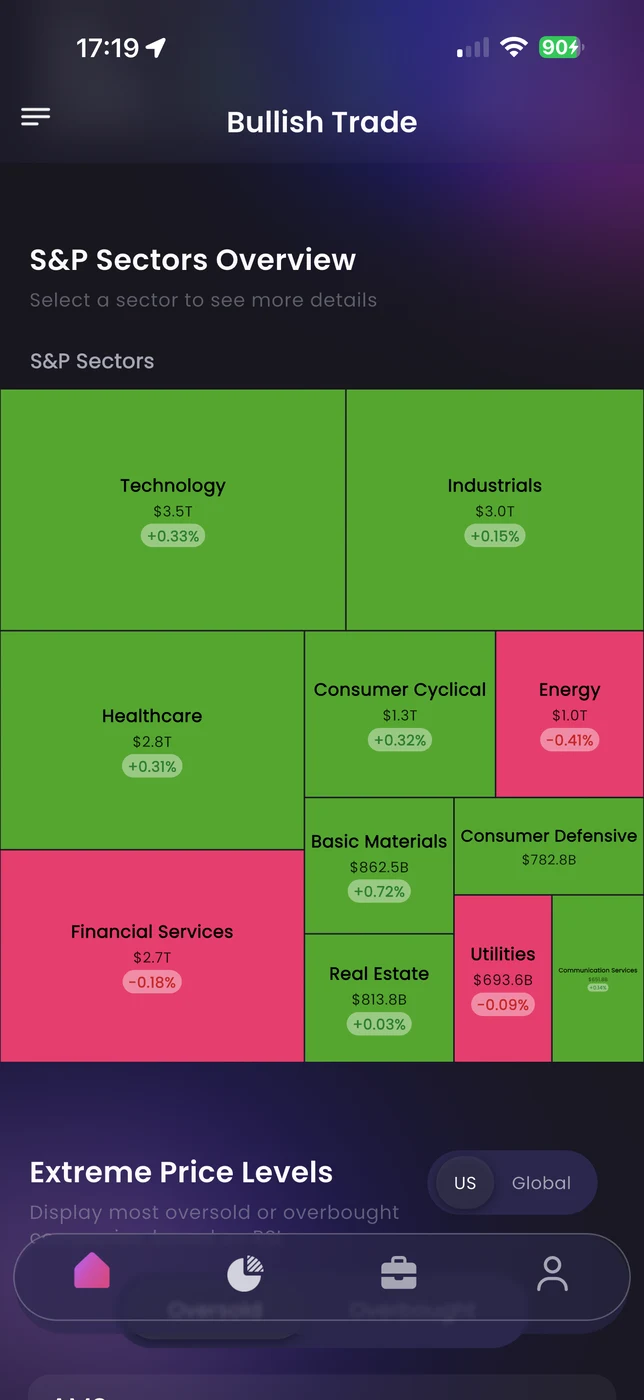
Use market dashboards, unusual volume, public trades, pattern matching, and seasonality to narrow the list before the move becomes obvious to everyone else.
Keep earnings dates, valuation context, financial quality, insider activity, and shareholder context close so the chart is not the only thing guiding the trade.
Scan option strategies across the companies and setups you care about, then review the trade detail before you commit capital.
Use Bullish Trade anywhere
Keep the same portfolio-strength workflow on desktop, mobile, and web. Choose the setup that fits how you invest.



Too many traders start with a chart and end with a guess
Markets move fast. Your workflow cannot depend on opening ten tabs after the move is already obvious.
Use Market at a Glance, recent returns, gainers and losers, 52-week extremes, unusual volume, and moving-average views to surface names worth a closer look.
Use Company Insights as the entry point for normal research, seasonality, pattern matching, and watchlist management instead of rebuilding the same list in separate tools.
Recent insider and Senate trades add another layer of context when you want to see who has been active around the name.
Combine market context, historical analogs, and trade structures to determine whether the setup is worth taking — and how to express it.
When a setup looks interesting, ask what similar moments have done before
Traders often know the chart is interesting but not whether this kind of move usually follows through, fades, or chops around.
Scan for similar historical setups in other instruments, choose faster or deeper analysis modes, and review bullish versus bearish outcomes, move distribution, and scenario projections.
Check 3-year, 5-year, 10-year, and all-time tendencies, then compare the main ticker with peers to see whether timing strength is company-specific or broader.

Know the company before you trade the ticker
Price action is easier to trust when you understand what can break it.
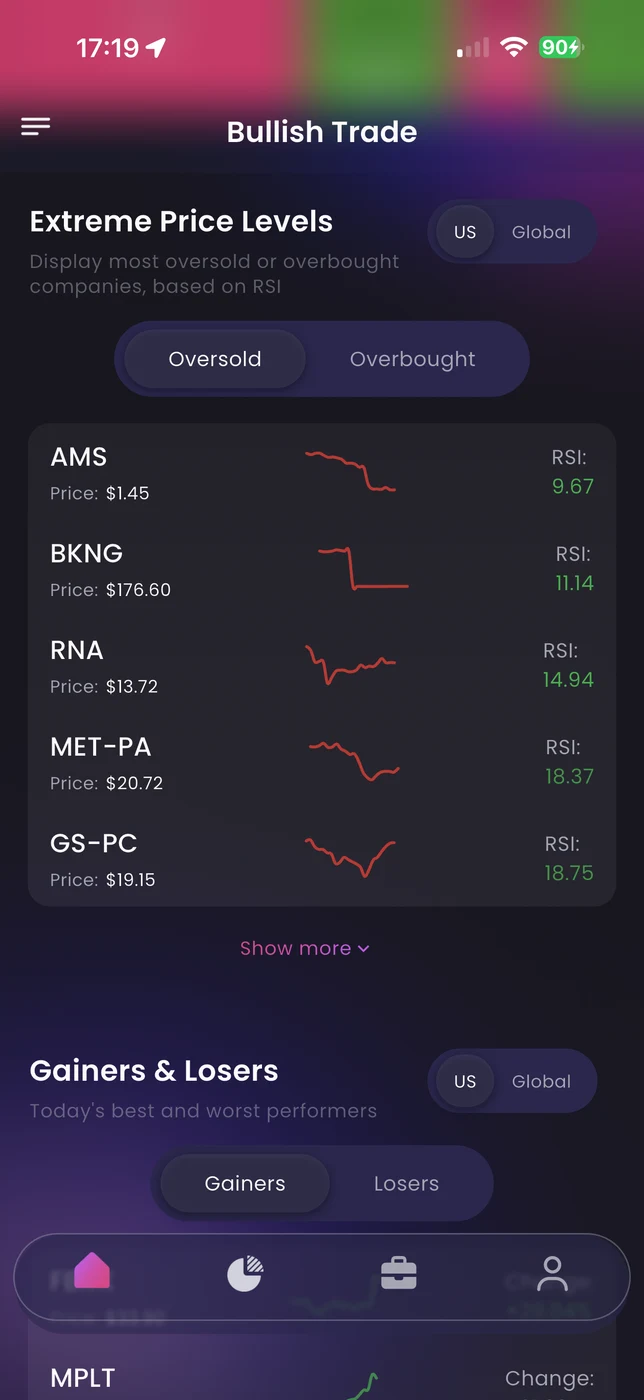
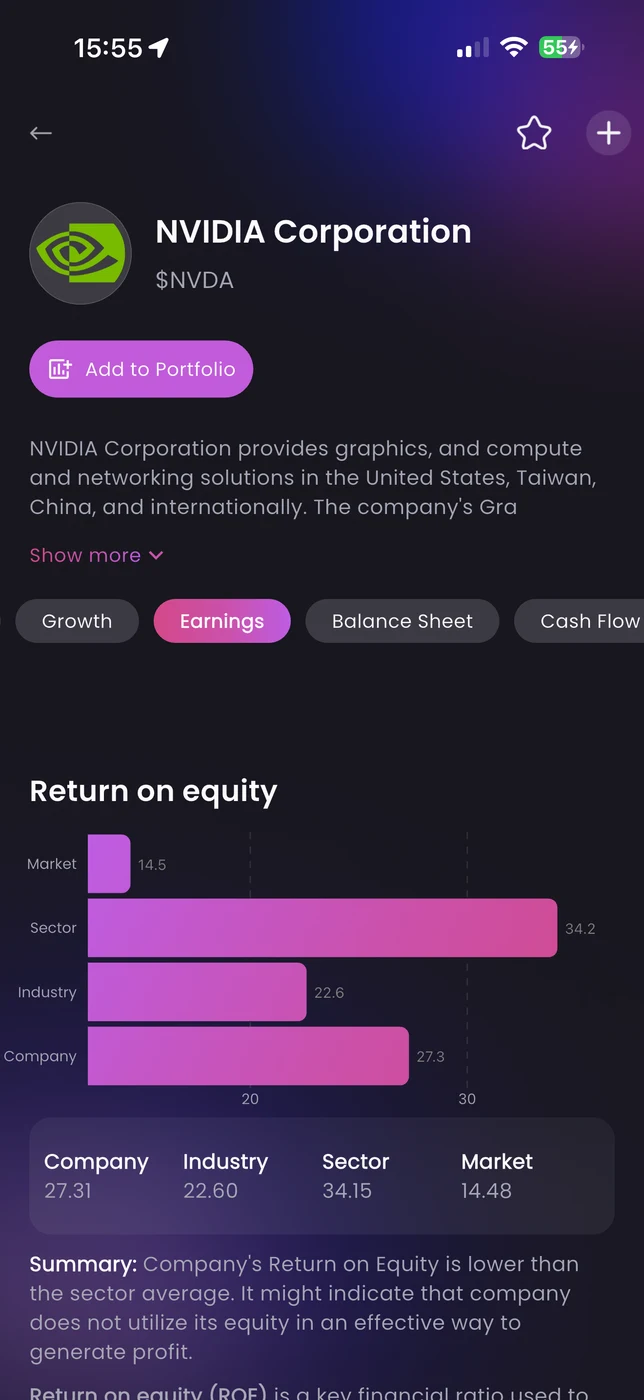
Keep earnings schedule, analyst target context, historical multiples, and peer comparisons close before you chase or fade a move.
Use profitability, balance sheet, cash flow, and risk views to see whether the setup sits on top of strength, fragility, or a turnaround story.
Review insider transactions, congressional activity, major holders, and institutional ownership when positioning and sentiment matter.
A pattern gains meaning only when viewed against past behavior. Use Pattern Matching or Seasonality to see similar setups and outcomes.
Stop scanning option chains manually for trades that do not fit the setup
One ticker can support several structures or none at all. The work is filtering the market down to trades that match your thesis and risk rules.
Choose the companies you want to scan, choose the strategy types you trade, and let the app search company by company instead of rebuilding scans from scratch.
Set DTE, delta, premium, credit or debit, volume, open interest, and other constraints depending on the strategy you are running.
Review Companies, Strategies, and All Trades tabs, then narrow to best-rated trades when you want the shortlist faster.
The edge comes from how you express the idea. Understand payoff, risk, and conditions before sizing up.
From idea to execution
Research is only useful if it helps you make and manage an actual trade.
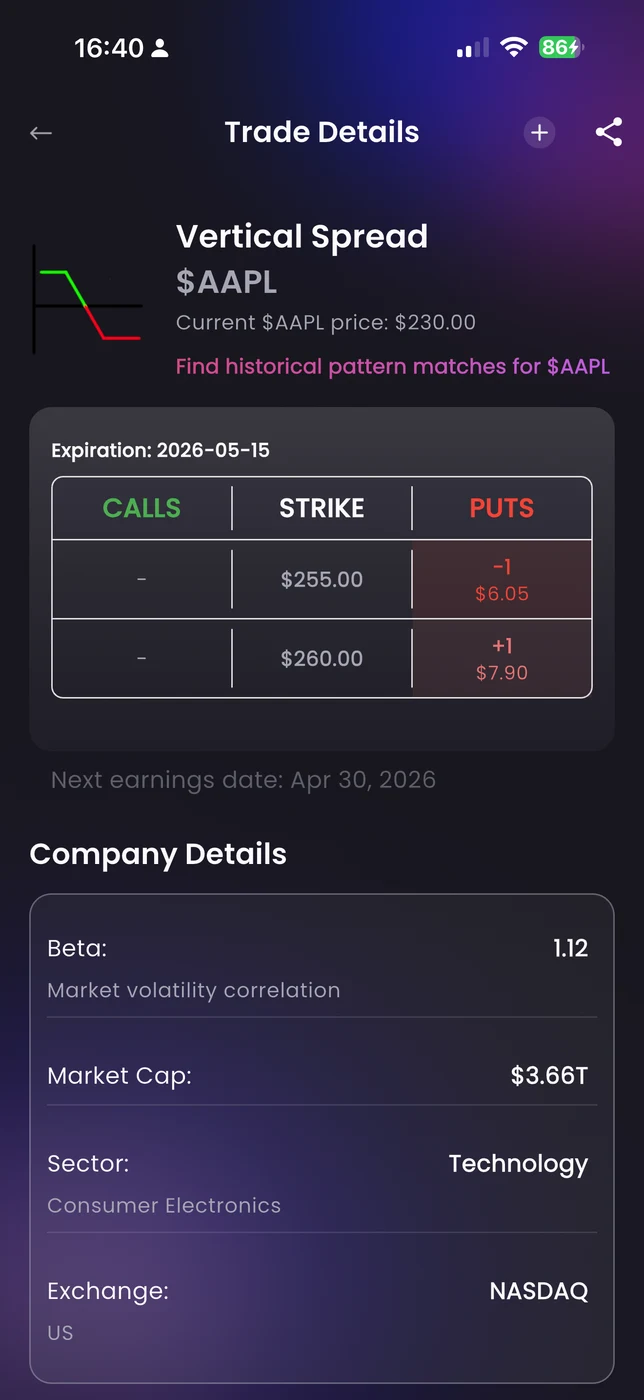
Open the strategy graphic, underlying price, strikes, earnings widget, company stats, trade stats, description, and trade points before you act.
Jump from a trade into historical pattern matching for the same ticker when you want extra context around the setup.
Add option ideas to your trade log, enter stock trades, or share trade ideas with public links when you want a cleaner record of what you did.
Track outcomes and revisit setups to understand where your assumptions held — and where they didn’t.
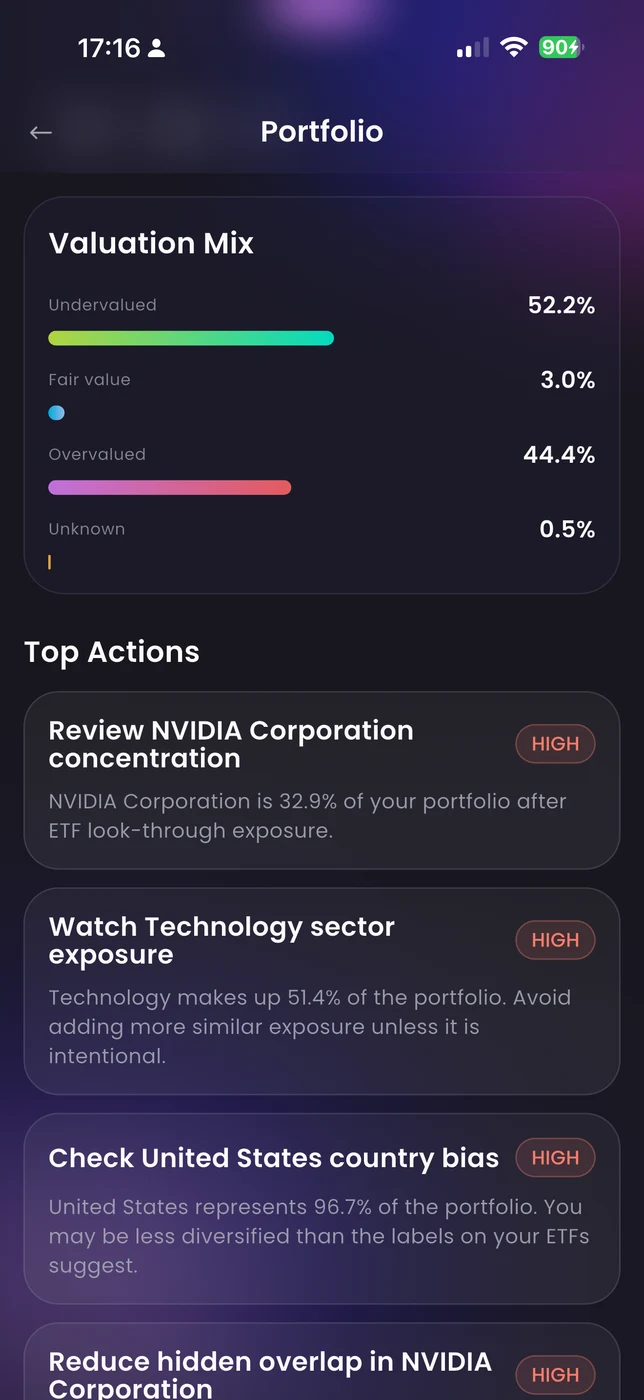
From setup to structured trade
Surface the ticker, validate the context, run the scan, and keep the trade workflow moving.
Use market dashboards, public trades, seasonality, and pattern matching to find names worth your attention.
Review catalysts, valuation, financial quality, and activity around the ticker before you size into the move.
Run the Options Finder across your watchlist and strategy playbook, then narrow to the trades that fit your rules.
Open trade detail, save ideas to the trade log, and keep a clearer record of what you took and why.