See what you own. Put money where it matters.
Why investors use Bullish Trade
Look through stocks and ETFs together so hidden overlap, sector crowding, and country concentration stop hiding inside a portfolio that looks balanced on the surface.
Move from headline numbers into valuation, growth, profitability, balance sheet, cash flow, dividends, and insider activity without rebuilding the same research in different tabs.
Compare a stock or ETF against what you already own before you add it, so the next purchase improves the portfolio instead of quietly duplicating it.
Use Bullish Trade anywhere
Keep the same portfolio-strength workflow on desktop, mobile, and web. Choose the setup that fits how you invest.



Most portfolios look diversified until you inspect what is underneath
Stocks, ETFs, and mixed currencies are easy to track at a headline level. The hard part is seeing where the real risk sits once everything is combined.
Record buys and sells manually or import CSV, then review value, cost basis, unrealized P/L, positions, and transaction history in one place.
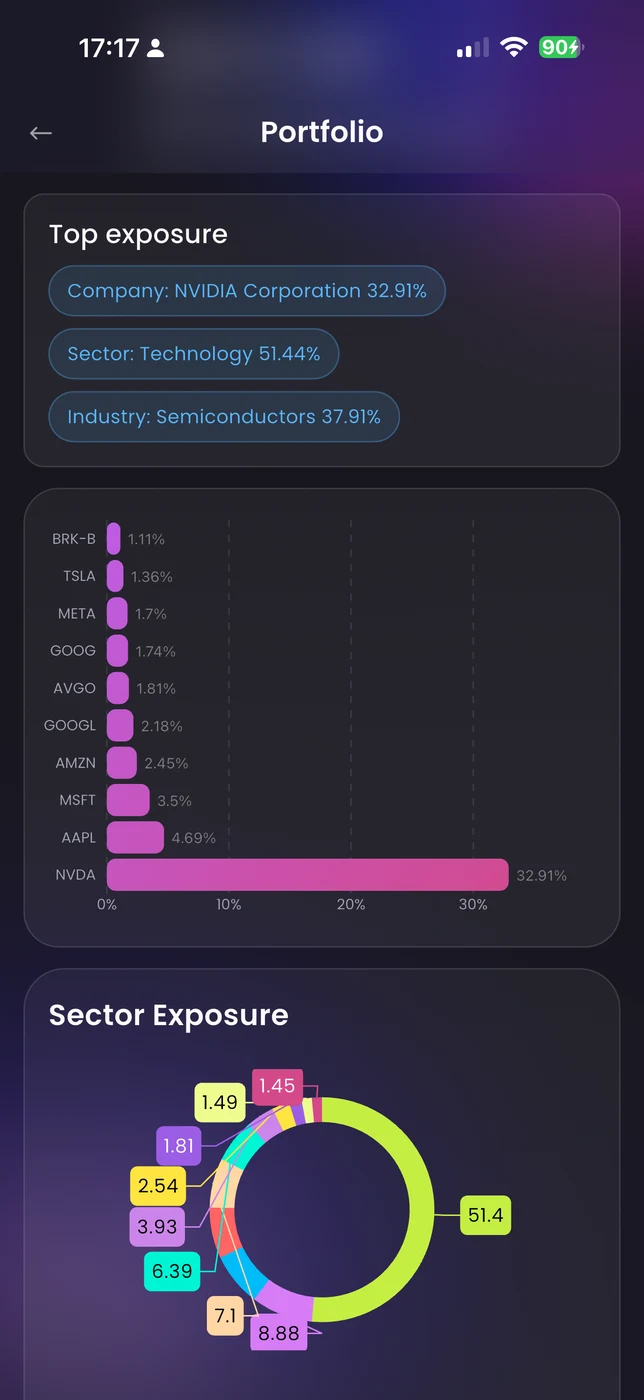
Break the portfolio into companies, sectors, countries, and industries so overlap and concentration stop hiding inside ETF wrappers.
Review performance history against SPY or VT, check allocation mix, and see which positions or regions are doing most of the work.
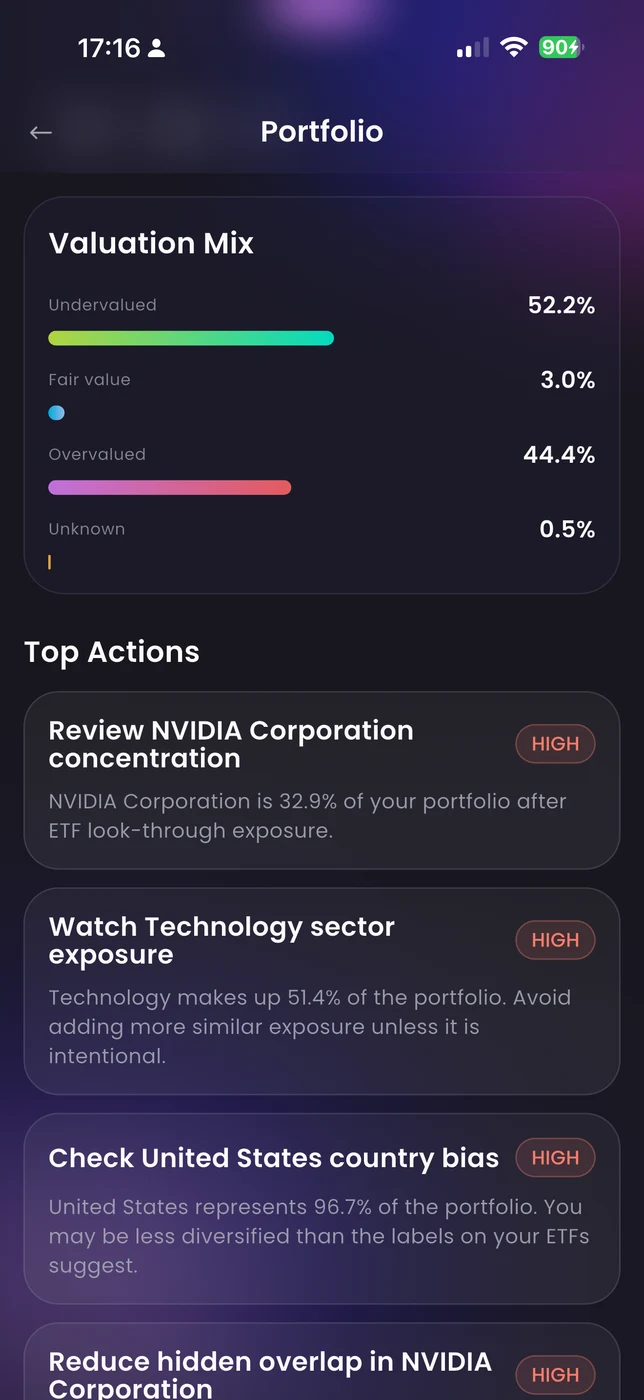
Surface concentration risks, overvalued positions, and imbalances so you know what to reduce, add, or leave unchanged.
When a name stands out, go from surface interest to real research
Instead of bouncing between screeners, filings, and summary sites, open one company workspace and keep the context intact.
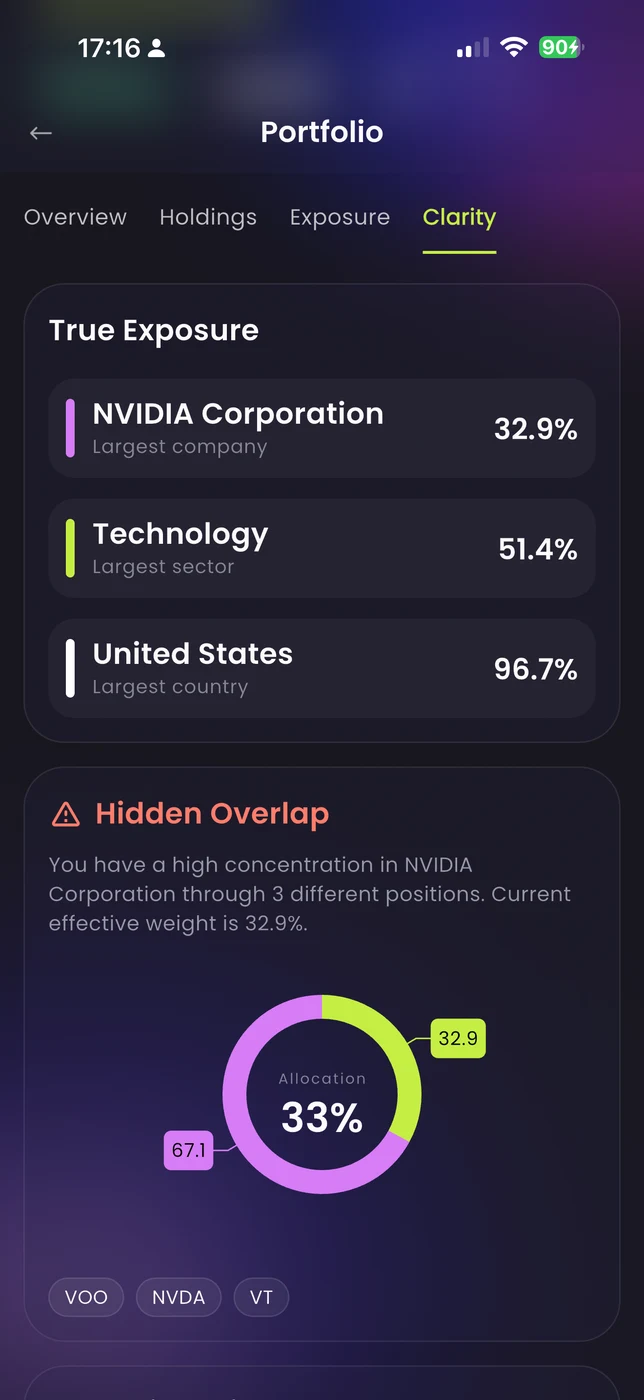
Check historical multiples, peer comparisons, analyst targets, earnings surprises, per-share growth, and future ROE expectations before you call a stock cheap or expensive.
Review margins, ROIC trend, liquidity, debt, cash flow quality, and owner-earnings style context before you call the business durable.
Use dividend stability, payout sustainability, insider transactions, congressional trading, and major-holder context when capital returns matter to the thesis.
Evaluate stability, downside behavior, and financial quality to balance upside expectations with real risk.
Stop judging ETFs by fee, theme, and ticker symbol alone
ETF names sound diversified. Portfolio impact is where the truth shows up.
Search by ticker or fund name, then narrow by asset class, issuer, domicile, country or sector exposure, minimum AUM, maximum TER, or low-fee and low-overlap presets.
Open ETF detail to review holdings, top weights, geographic allocation, sector mix, strategy description, and look-through exposure instead of relying on a label.
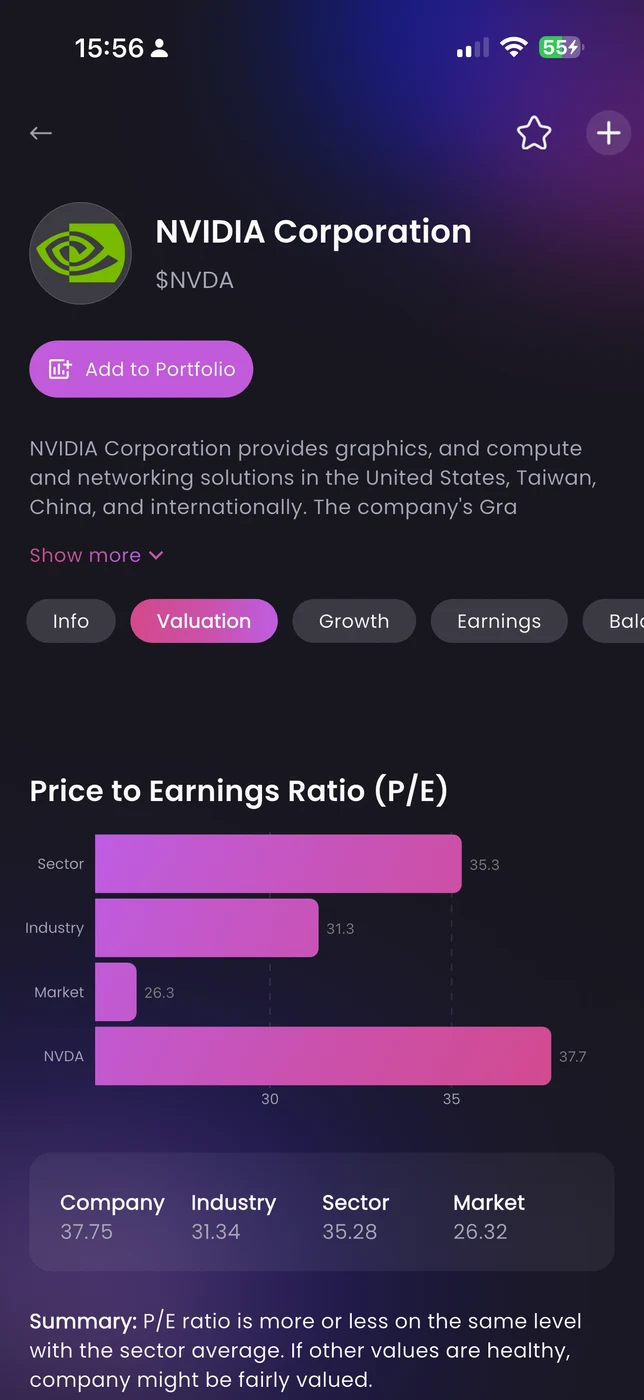
Compare the ETF against your portfolio across companies, sectors, countries, and industries before you add another fund that mostly repeats what you already own.
Assess how the ETF alters concentration, diversification, and valuation across your existing holdings.
Get clearer next steps instead of another dashboard you have to interpret alone
Sometimes the right answer is rebalance. Sometimes it is hold. Sometimes it is stop tinkering.
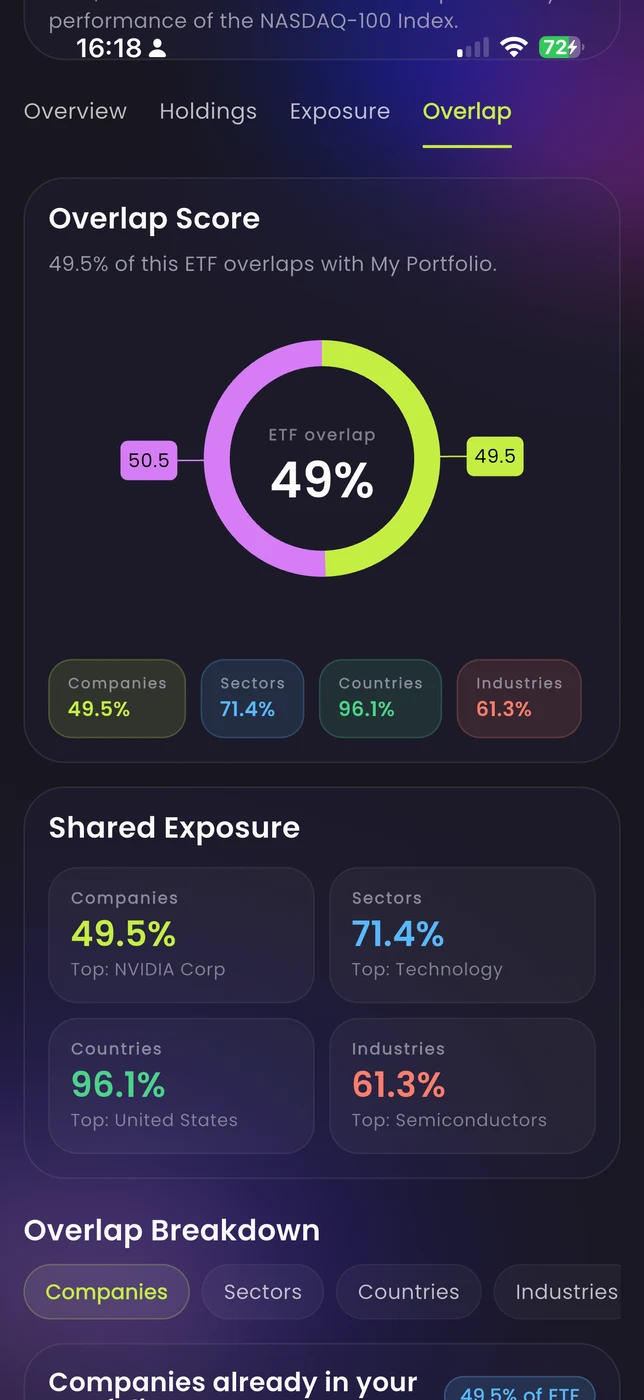
Use true exposure, concentration views, valuation mix, top actions, and hidden-position insights to see what actually deserves attention.
The goal is not to manufacture activity. It is to show what looks crowded, stretched, balanced, or still reasonable so you can act with more confidence.
Use timing tools after the research makes sense, not instead of it
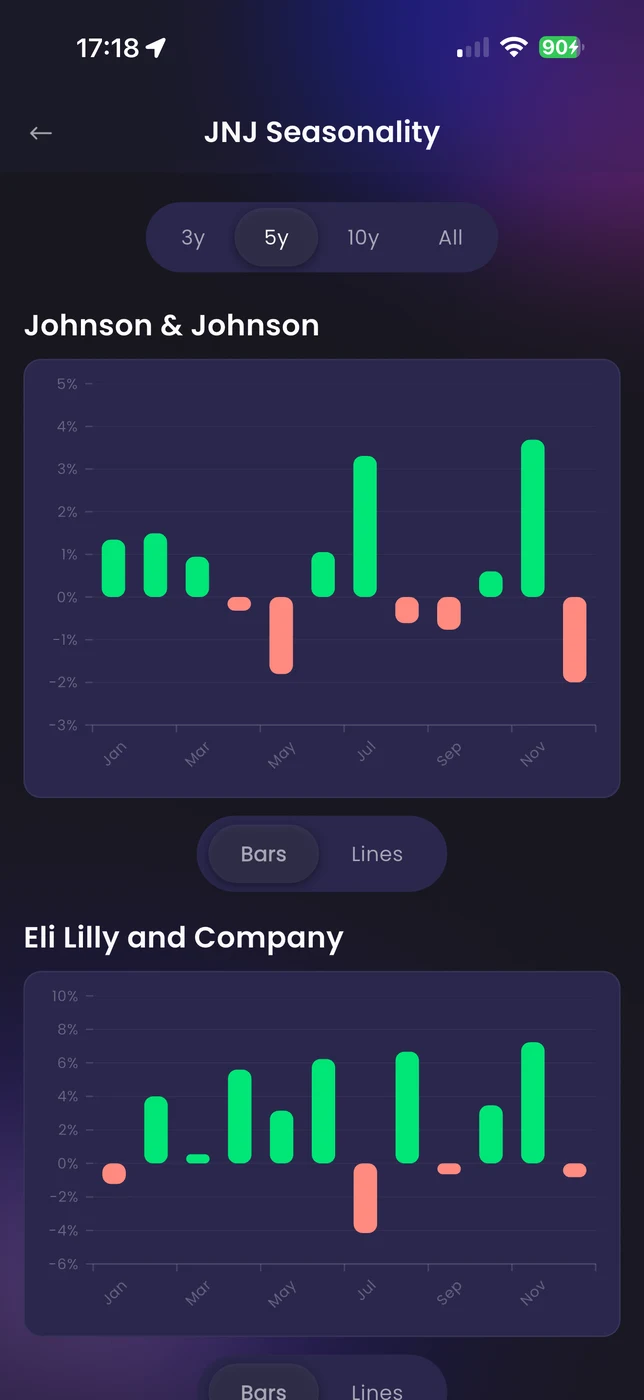
Once the business and portfolio fit check out, seasonality and historical pattern matching can help with entries, trims, and patience.
That keeps timing inside an investing workflow instead of turning it into a separate game.
From question to conviction
Start with the portfolio or the idea, then go deeper only where the evidence says you should.
Add holdings, look through ETF layers, and find the exposures that are actually driving the portfolio.
Open the companies and ETFs that stand out and review valuation, quality, dividends, holdings, and activity in context.
Judge whether a stock or fund adds something useful or mostly duplicates what is already there.
Use clearer portfolio context to add, trim, rebalance, or do nothing for the right reason.